Do You Need a Permit to Clear Land in Mississippi?
Mississippi has no single statewide permit called a land clearing permit. Several rules can still apply, depending on how many acres you disturb and what sits on the land. Wetlands, a mapped flood zone, burning the brush, digging out stumps and local permits each bring their own rule.
The agencies decide what applies, so this guide shows each rule and who to ask. We do land clearing across southeast Mississippi and southwest Alabama. We clear the ground to fit whatever permit the job carries.
Which rules can apply when you clear land?
| Situation | Rule that can apply | Who to ask |
|---|---|---|
| Disturbing 1 acre to under 5 acres | MDEQ’s Small Construction General Permit | MDEQ |
| Disturbing 5 acres or more | MDEQ’s Large Construction General Permit | MDEQ |
| Fill or moved soil in a wetland | Section 404, plus a Section 401 water quality certification | The local Corps district office; MDEQ for the 401 |
| Land in a mapped flood zone | The local floodplain permit | Your city or county |
| You plan to burn the brush | MDEQ’s open burning rules, local ordinances and county burn bans | Your city or county |
| Stumps and roots will be dug | A Mississippi 811 locate request, 3 to 10 working days ahead | Mississippi 811 |
| A new drive off a county road | The county’s road rules | The county road department |
| Land across the line in Alabama | ADEM’s construction general permit at 1 acre or more | ADEM |
Does clearing land need an MDEQ stormwater permit?
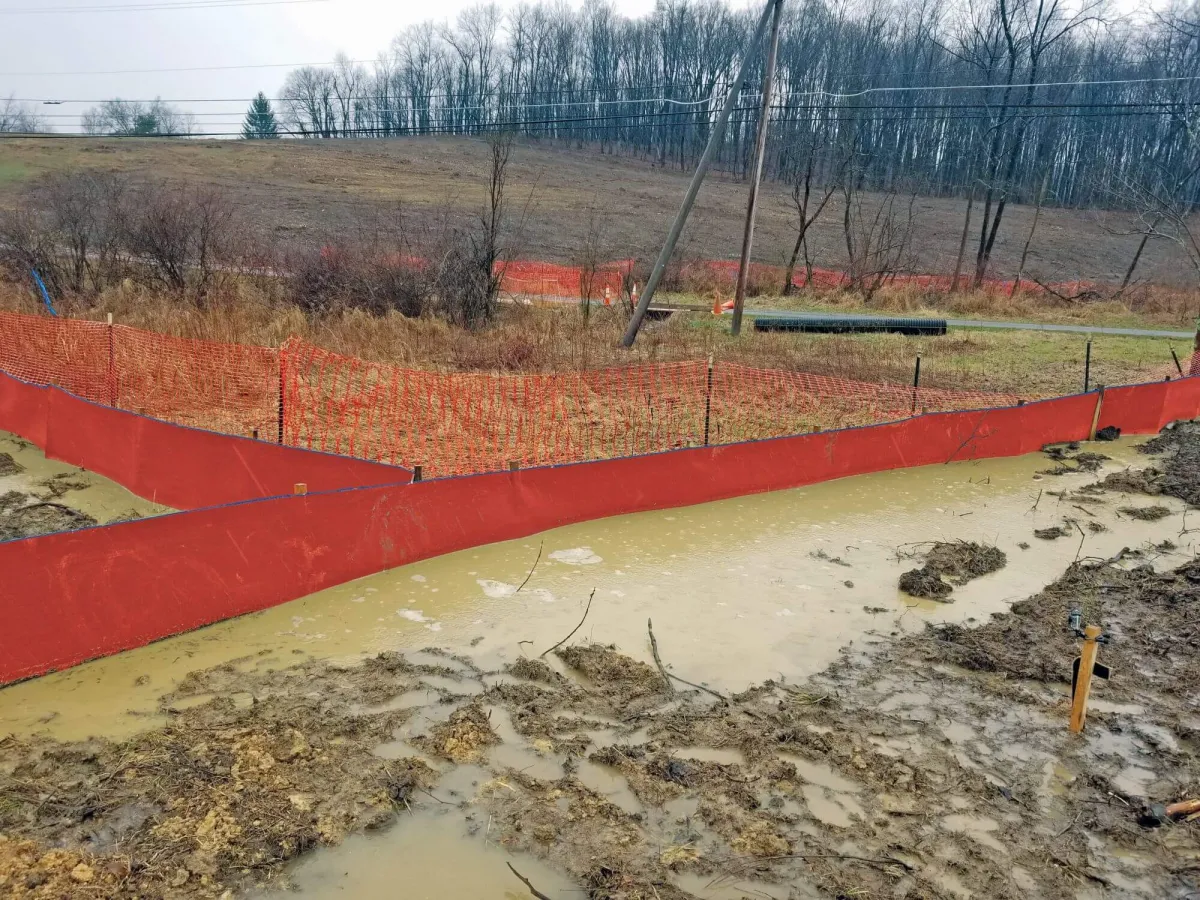
It can, once the work disturbs an acre or more. MDEQ’s Small Construction General Permit covers construction that disturbs 1 acre to less than 5 acres. The Large Construction General Permit covers clearing, grading, grubbing, excavating and other land disturbing work on 5 or more acres. A smaller lot can still count when it is part of a larger common plan of development or sale.
On a small site, the owner or operator completes a Small Construction Notice of Intent before work starts. That notice and the site’s stormwater plan, called a SWPPP, go to MDEQ only upon request. On 5 acres or more, the owner submits a notice and waits for MDEQ’s written notice of coverage.
The small permit leaves out routine maintenance. Examples include maintaining existing ditches, routine grading of existing dirt roads and re-clearing vegetation in a right-of-way.
On land that will not be built on soon, forestry mulching is one option. It grinds the growth in place, so the roots stay and the ground stays covered. Ask MDEQ whether your job needs coverage before the machines start.
Do you need a permit to clear wetlands?
Wetlands bring in federal rules. Section 404 of the Clean Water Act covers dredged or fill material in waters of the United States, wetlands included. The U.S. Army Corps of Engineers runs those permits.
Federal rules list mechanized land clearing among the work that can put soil back into a wetland. The same rule leaves out cutting plants above the ground, such as mowing. That holds when the roots stay mostly intact and no soil gets pushed or dragged. Which side of that line your job falls on is the Corps’ call.
A Corps permit can also need a water quality certification under Section 401. In Mississippi, that certification comes from MDEQ.
How do you know if your land has wetlands?
A wetland is not always wet. Federal rules define wetlands as areas flooded or saturated often and long enough to support plants adapted to saturated soil. EPA notes that Mississippi bottomland hardwood swamps are often dry.
A wetland delineation maps which waters on a property fall under Section 404. It follows the Corps’ 1987 wetlands manual and its regional supplements. They sort the signs into soils, plants and water, and an area that meets all three counts as a wetland.
Most often, the permit applicant sends the Corps a preliminary delineation, and the Corps checks it. The Corps also issues the formal ruling on whether a water falls under Section 404, called a jurisdictional determination. If your tract runs down into a creek bottom, ask before the machines go in.
Are farming and forestry exempt from wetland permits?
Some ongoing work is. Section 404(f) exempts established, ongoing farming, ranching and forestry activities. EPA’s examples include plowing, seeding, cultivating, minor drainage and harvesting.
Bringing a wetland into farm production for the first time needs a permit. In general, so does any discharge tied to converting a wetland to upland. To check a specific job, EPA points to the local Corps district office.
Do you need a permit to clear land in a flood zone?
You may. Cities and counties in the National Flood Insurance Program must require permits for all proposed construction or other development. Federal flood rules define development broadly: any man-made change to real estate, including filling, grading and excavation.
So ask your city or county before any fill, grading or digging on land in a mapped flood zone.
Can you burn the brush instead of hauling it?
MDEQ does not issue open burning permits, but its open burning standards must still be followed. The Mississippi Forestry Commission’s permits are for forestry and agriculture burns only. For land clearing, it says to follow local ordinances.
Without a forced-draft air system, a land clearing burn must not take place within 500 yards of an occupied dwelling. County burn bans can also apply. The county board of supervisors normally asks for a ban, and the Forestry Commission approves it.
On our jobs, the brush and stumps go out on our own trucks, and mulch stays on the ground. Our land clearing cost guide covers how disposal moves the price.
Do you need to call 811 before clearing land?
Pulling stumps and raking roots breaks the ground. Mississippi law requires the excavator to submit a locate request 3 to 10 working days before excavating. The same rule covers trenching for underground utilities later on.
Does your city or county have its own permit?
Some cities here issue their own land clearing or land disturbance permits, and the rules vary by town. Ask the city or county before the machines start. Our guide to site prep for a new house covers town permits and flood zone pad rules.
For a new entrance off a county road, call the county road department first. Some counties ask for a permit, and some set the culvert themselves.
What about land across the line in Alabama?
In Alabama, ADEM’s construction general permit covers land disturbance equal to or greater than one acre. The federal wetland and flood rules apply there too. Ask the county about local permits and burn rules.
Who holds the permits, and how do you get started?
The permits belong to the landowner or the project’s operator, who also deals with the agencies. MDEQ’s notices come from the owner or operator. Our part is the clearing, done to fit the permit and its plan. On a building site, that leads into site preparation for the pad and the drive.
Know which rules apply, then see how we handle clearing land across southeast Mississippi. We look at the site, or you send photos and a pin, and we put the quote in writing. Call or text (601) 410-5339.