
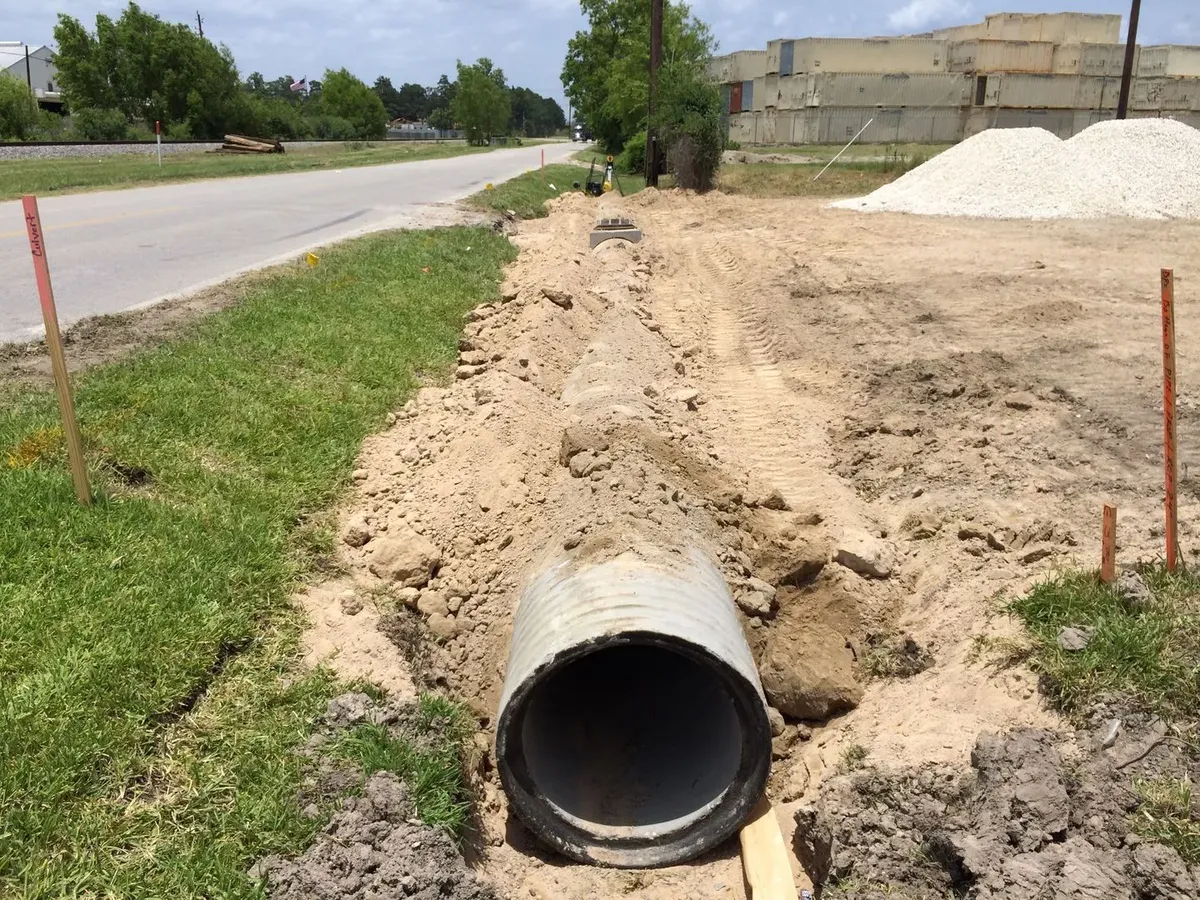
How Much Does a Driveway Culvert Cost in Mississippi?
A driveway culvert costs $1,000 to $9,000 installed, per a national cost guide updated July 8, 2026. Its average is about $4,500. The length and type of pipe and the driveway material move the number. The pipe itself is the small part. A 24 inch by 20 foot length runs $700 in plastic, or about $800 in aluminum or galvanized steel.
A second national guide prices culverts or drains at $500 to $2,000 as one line of a gravel driveway job. These are market numbers, not our price list. In Mississippi, the bigger question is often who sets the pipe and who pays for it.
We are based in Waynesboro in Wayne County. Our work on culverts under driveways and field roads covers pipe on your own land. We also build the entrance, pad and drive behind the county’s pipe. On a county road or a state highway, the county or MDOT sets the size and the rules. We build to them.
What does a driveway culvert cost in Mississippi?
Every figure here is a national market number, not our price list.
| Line item | Market number | Source |
|---|---|---|
| Driveway culvert, installed by a pro | $1,000 to $9,000, about $4,500 on average | National cost guide, July 2026 |
| Culverts or drains on a gravel driveway job | $500 to $2,000 | National gravel driveway cost guide |
| Plastic pipe, 24 inch by 20 foot length | $700, pipe only | National cost guide, July 2026 |
| Aluminum or galvanized steel pipe, same size | About $800, pipe only | National cost guide, July 2026 |
The installed range may or may not include stone, rock or sod to line the ditch, the guide says. It usually includes resurfacing the part of the drive over the pipe. In some Mississippi counties, the county installs the pipe under a county road, which changes who pays.
Who sets the culvert size and pays for it in Mississippi?
It depends on the road your drive meets.
| Where the drive meets the road | Who sets the rules | What the published rule says |
|---|---|---|
| A Forrest County road | Forrest County Road Department | One culvert per new home, provided and installed by the county, up to 30 feet |
| A Lauderdale County road | Lauderdale County Road Department | A county Permit Office permit first, then the department installs |
| Any other county road | That county’s road department | Call before the drive goes in |
| A state highway | MDOT | Form MND-001 permit, pipe at least 15 inches, work at the applicant’s expense |
| Your own land | You | Size the pipe for the water that reaches it |
Forrest County’s culvert policy cites Mississippi Attorney General opinions. Those opinions say a county may provide and install culverts so private property can reach a county road. The reason is to preserve the road and right of way, not to benefit the landowner.
Under that policy, the county provides one culvert per new home, plus the gravel or fill it needs. The pipe sits on county right of way and runs no more than 30 feet. It goes in only when a new house or other structure is being built, after all utilities are in.
Second or circle drives, business property and commercial developments get no county culvert. Neither does access to farm land, forest or empty lots. There the owner buys the pipe, sized to county specs, and the Forrest County Road Department still installs it.
Lauderdale County’s Road Department installs culverts for new residents after a permit from the county Permit Office. Once the permit flags are in place, the department does the work. Rules can differ by county, so call your county’s road department before the drive goes in.
A drive onto a state highway goes through MDOT’s driveway permit, Form MND-001. MDOT’s permit rule sets 15 inches as the smallest driveway pipe. The applicant provides approved drainage structures at his own expense, built to MDOT’s pipe culvert criteria. The permit is void if the work is not finished within one year after approval.
Across the line in Alabama, ALDOT’s access permits cover driveways, which it calls turnouts, from private property onto state highways. On an Alabama county road, call the county first.
Which culvert pipe works best under a driveway?
A national cost guide sorts the trade-offs like this.
| Pipe | Strong points | Weak points |
|---|---|---|
| Plastic | Light and easier to install | Not as strong as steel |
| Galvanized steel | Strong, suits heavy traffic | Prone to rust |
| Aluminum | Does not rust | Not as strong as steel |
| Concrete | Durable, suits heavy traffic | Heavy, needs more labor and extra machinery |
What size culvert does a driveway need?
Where the drive meets a public road, the county or MDOT sets the minimum. MDOT’s rule puts the floor at 15 inches on a state highway. A county may set its own size, so ask its road department before you buy pipe.
National advice can run smaller. A national cost guide says driveway pipe is typically 10 or 12 inches, occasionally smaller or larger. Either size falls short of MDOT’s 15 inch floor.
On your own land, no county or MDOT rule sets the pipe. A useful yardstick is the Mississippi Forestry Commission’s best management practices manual, written for forest roads, not driveways. In most cases it recommends at least an 18 inch culvert. A smaller pipe can work where minor drainage crosses flat ground. Its size chart calls for bigger pipe as more acres drain to it. Clay ground needs it sooner than sand.
The manual also calls for at least 12 inches of earth fill over the pipe. Where half the pipe’s diameter is more, the cover should match it. The pipe should run the full width of the roadbed, side slopes included.
What moves the price of a driveway culvert?
- Length. The national guide ties the price to the length and type of pipe. The pipe should span the full roadbed, so a wide drive or tall fill takes more of it.
- Diameter. A bigger pipe needs more fill on top, by the forestry manual’s cover rule.
- An old pipe out first. A rusted or crushed pipe gets dug out before the new one goes in.
- Stone and fill. The guide’s range may or may not include stone, rock or sod for the ditch.
- The ends and the drive surface. The guide’s price usually covers resurfacing the drive over the pipe. Forrest County will not replace a concrete drive or designed ends over a culvert it repairs or replaces.
Who builds the culvert and drive on your own land?
On your own land, you decide where the pipe goes and hire the work done. That is the culvert work we do. The pipe may go under a drive across a branch or under a field road. It may also drain a pad or a yard. See culverts under driveways and field roads for the trenching and pipe side.
In Forrest County, the utilities go in before the county’s culvert. The policy also recommends a second entrance for heavy equipment. For the entrance, pad and drive behind the county’s pipe, see site preparation for the entrance and pad. Our guide to the steps from a raw lot to a house pad walks through the rest.
We look at the site, or you send photos and a pin, and we put the quote in writing. Call or text (601) 410-5339.