Forestry Mulching or Dozer Clearing: Which Does Your Mississippi Land Need?
The answer turns on what the ground has to do next. Forestry mulching fits land that stays in cover, like hunting woods or a fence row gone to brush. Dozer clearing fits land that has to come up clean, like a house site or a new pasture. We do both from Waynesboro in Wayne County, across southeast Mississippi and southwest Alabama.
Per acre, national cost guides price mulching well below full land clearing. One guide puts mulching at $400 to $800 an acre and full clearing at $1,200 to $8,000. Those are market numbers, not our price list. What decides the method is whether the stumps and roots can stay.
What does each method leave behind?
Forestry mulching runs a mulching head over the growth. It grinds brush, saplings and small trees into mulch where they stand. Alabama Extension notes that brush mulchers often leave a thick mulch layer. Nothing gets piled or hauled.
The stumps and roots stay behind. One national cost guide notes that drum heads grind stumps to the ground, while disc heads leave them visible.
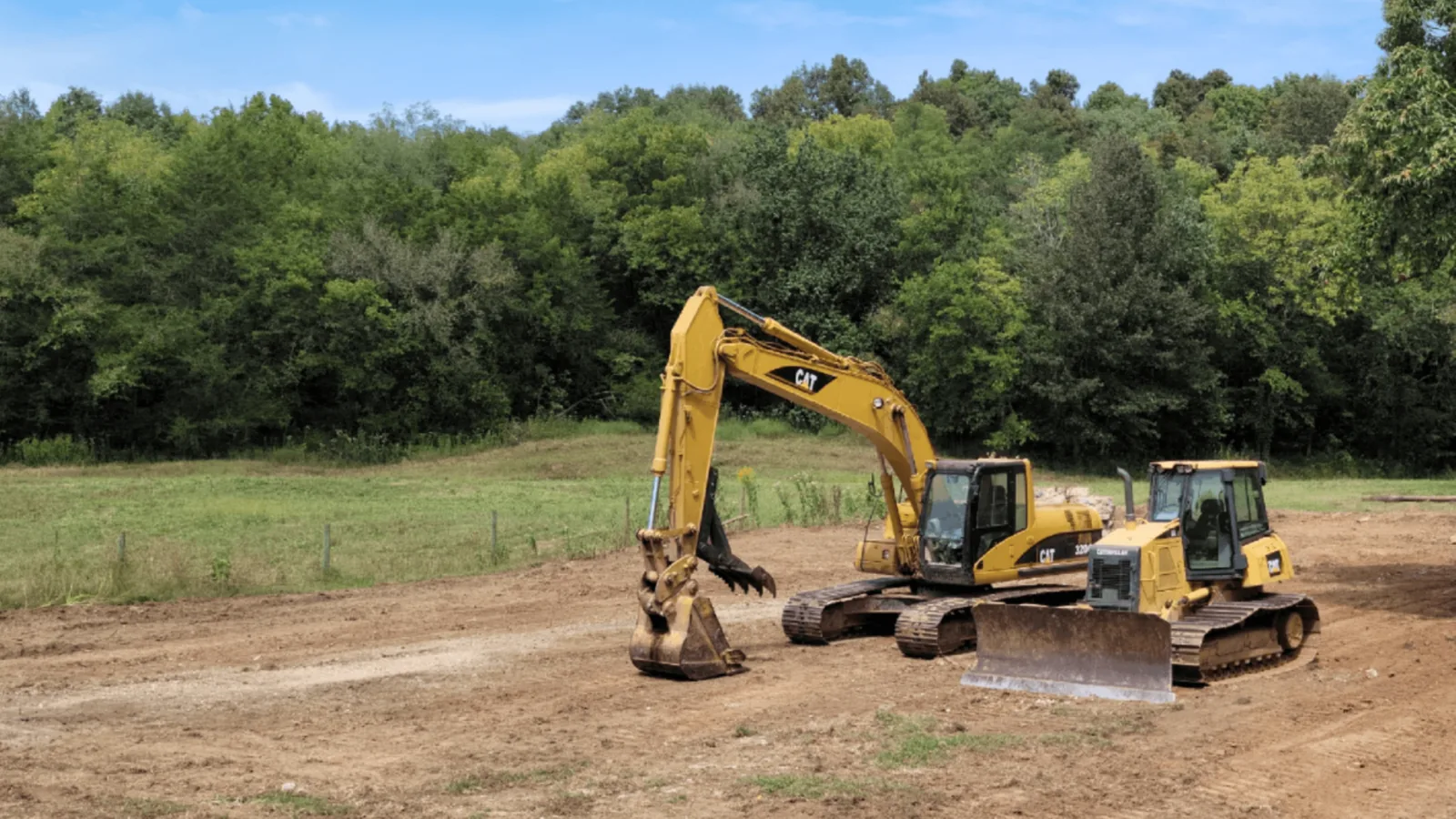
Dozer clearing is the full land clearing job: the growth comes out, roots and all. The tree shear or the excavator brings the trees down. Then the root rake, a toothed blade on the bulldozer, combs out the stumps and roots.
The debris goes on our own trucks and off the property. What is left is bare ground, ready to grade, build on, fence or plant.
| What you get | Forestry mulching | Dozer clearing with a root rake |
|---|---|---|
| Trees | Brush and small trees only | Larger trees too, cut or sheared |
| Stumps and roots | Left in the ground | Raked out |
| Debris | Stays on the ground as mulch | Hauled off on our own trucks |
| Ground after | Covered in mulch | Bare soil, ready to grade |
| Regrowth | Sprouts from stumps and roots | Seedlings on the bare soil |
| Best fit | Hunting land, fence rows, trails, land you will not build on soon | House pads, shop pads, new pasture, food plots you disk |
When does forestry mulching fit?
Forest covers more than 60 percent of Mississippi, per MSU Extension. In the Piney Woods, a pine stand can grow up underneath in sweetgum and privet. The mulching head clears that understory and leaves the pines you mark to keep.
It also fits fence rows gone to brush and shooting lanes on hunting land. MSU Extension says mulching is sometimes used on small acreages and in some wildlife work. A national cost guide says it suits owners who do not plan to grade or dig right away.
Food plot edges are mulching work too. Mississippi State’s food plot guidance puts plots near cover, like brushy areas and fence row corners. The head opens lanes and cuts back plot edges while the cover nearby stays.
When does the land need the dozer, the shear and the root rake?
A house site needs the stumps and roots out. Federal rules for setting a manufactured home say why. All organic material, such as roots and wood scraps, must come out where footings go, to help prevent settling. That is why a homesite gets grubbed and graded for a house pad rather than mulched.
A new pasture needs clean ground too, because stumps get in the way of mowing and haying. So does a food plot you disk. The state wildlife agency’s food plot guide starts a cool-season seedbed with thorough disking.
Cutover ground depends on the plan. For a homesite or a pasture, the dozer and root rake clean up the stumps and logging debris. For hunting land, mulching opens it and leaves cover.
Replanting pine is its own question. MSU Extension says herbicide site prep costs less than machine work and is used much more. It calls mulching too costly for most forestry site prep, so talk to a forester first.
Will the brush grow back?
Mulched ground sprouts back, because the roots stay in the soil. MSU Extension says mulching rarely gives long-lasting control of what it cuts. Alabama Extension says privet sprouts fast from stumps and side roots after mulching.
That regrowth tends to come up even, and Alabama Extension notes it is easy to spray. A second pass with the mulching head knocks it back down. The Mississippi Forestry Commission says frequent mowing can also hold privet back.
Root raked ground sprouts less from below, because the stumps and roots come out. The Forestry Commission notes privet has to lose its entire root to stop resprouting. Bare soil grows a new crop from seed, though.
Alabama Extension expects a flush of seedlings the year after heavy control, mostly along woods edges. The Forestry Commission finds cogongrass seedlings on disturbed open ground, and equipment is one way it spreads. Cleared ground does best with its next use lined up, like grass seed or a pad.
What about erosion and topsoil?
Southeast Mississippi gets a lot of rain. NOAA’s normals put Waynesboro at about 60 inches a year. January and December are the wettest months, and October is the driest.
Mulched ground stays covered through that rain. The EPA lists mulching as an erosion control practice that holds exposed soil in place and slows runoff. Dozer clearing leaves bare soil until grass or a pad covers it.
MSU Extension says topsoil drives site quality in Mississippi. It warns that windrowing debris can drag topsoil into the rows. The root rake helps, because its teeth comb roots out while the soil sifts back through. Forestry references say rakes work best in dry or sandy soil, so root raking suits a dry spell.
Building sites bring rules too. MDEQ’s construction stormwater permits cover clearing and grading that disturb an acre or more. Those permits call for stabilizing bare ground once work on it stops for 14 days or more.
How do the costs compare?
Per acre, mulching usually comes in lower. The table shows market numbers from national cost guides and MSU Extension, not our price list. The MSU figure is for forestry site prep before replanting, not for clearing a homesite.
| Work | Market range | Source |
|---|---|---|
| Forestry mulching | $400 to $800 per acre, up to $2,000 in dense growth | National cost guide |
| Forestry mulching | About $400 per acre on average | Second national cost guide |
| Mulching for forestry site prep | $200 to $500 per acre | MSU Extension |
| Full land clearing | $1,200 to $8,000 per acre, by density | National cost guide |
| Mulcher with operator | $1,000 to $2,500 per day | National cost guide |
| Dozer or excavator with operator | $1,200 to $2,500 per day | National cost guide |
The day rates sit close together. The gap per acre comes from the extra steps in full clearing. The stumps come out, and the debris gets loaded and hauled.
One guide notes that some contractors include debris disposal in the price and some charge it separately. Ask what a quote covers. For the full per-acre breakdown, see what land clearing costs per acre in Mississippi.
Which one fits your tract?
Start with what the land is for. One tract can use both methods: the woods and fence rows mulched, and the homesite cleared to clean ground. The debris from the cleared part goes on our own trucks.
Tell us the plan when you call or text (601) 410-5339, and send photos and a pin if you like. We look at the site and put the quote in writing. Read more about forestry mulching around Waynesboro before you call.